
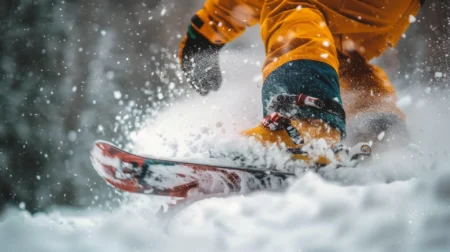
 Winter changes how the body moves. Cold air sharpens breathing. Muscles wake up slower. Balance matters more. You don’t just move through space. You negotiate with it.
That’s why winter sports feel so different from warm-weather ones. They demand attention. You can’t go on autopilot when the ground is slippery, the air bites, and mistakes have faster consequences. Even simple movement becomes deliberate.
For many people, that’s the appeal. Winter sports pull you out of routine and force presence in a way few other activities do.
Sliding Sports And The Art Of Controlled Speed
Some winter sports revolve around glide rather than impact. Skiing and snowboarding are the obvious examples, but the feeling goes deeper than equipment.
You’re not fighting gravity. You’re working with it. Balance, timing, and small adjustments matter more than brute strength. Your legs burn, but your mind stays alert because the surface beneath you never fully settles.
Cross-country skiing takes this idea in a different direction. Less speed, more rhythm. Endurance replaces adrenaline. The body works continuously while the mind falls into a steady loop. It’s one of the rare winter sports where silence becomes part of the experience.
These sports reward patience. The better you listen to your body and the terrain, the smoother everything feels.
Ice Sports Test Precision And Trust
Ice changes the rules completely.
Skating sports, whether it’s recreational skating, figure skating, or hockey, demand trust in edges thinner than a coin. You move fast on something that offers almost no forgiveness. That sharpens coordination quickly.
Hockey adds chaos. Speed, contact, rapid decisions. It’s intense, social, and exhausting in short bursts. Figure skating strips everything down to control, posture, and repetition. The ice doesn’t hide flaws. It reflects them.
Even casual skating builds ankle strength, balance, and spatial awareness. Falls happen, but confidence grows faster than fear once the body learns how to adjust.
Snow Without Speed Still Counts As Sport
Not every winter sport is about speed or competition.
Snowshoeing turns walking into resistance training. Every step costs more energy. Hills feel longer. The pace slows naturally, which allows breathing and heart rate to sync instead of spike.
Winter hiking does something similar, even without special gear. Cold air improves oxygen intake for some people, while uneven ground activates stabilizing muscles that rarely get attention.
Sledding sounds like a joke until you climb back uphill repeatedly. Then it turns into interval training disguised as fun. That’s part of winter sports culture. Effort hides behind play.
Strength Sports Shift Indoors But Stay Seasonal
Winter doesn’t eliminate strength sports. It reshapes them.
Indoor climbing, strength training, and functional workouts become more popular because they build heat fast and don’t depend on daylight. Bodies crave intensity when temperatures drop. Lifting, climbing, and controlled resistance give that outlet.
What changes is recovery. Cold tightens muscles. Warm-ups matter more. Mobility becomes essential, not optional. Winter athletes who ignore this feel it immediately.
Even outdoor bodyweight training feels different in winter. Shorter sessions, higher intensity, faster cooldowns. The margin for error shrinks.
Team Sports Feel Tighter In Winter
Winter team sports often happen in enclosed spaces or limited outdoor areas. That changes social dynamics.
Basketball, indoor soccer, and ice hockey create constant interaction. Less space means faster reactions and more communication. You can’t drift away mentally. The game pulls you in.
That intensity builds connection. Winter teams often feel closer because the environment demands cooperation. You rely on others more when conditions are harder.
There’s something grounding about sweating together while it’s freezing outside.
Cold Builds Mental Endurance Too
Winter sports train the mind as much as the body.
Getting outside when it’s cold requires friction. You negotiate with excuses. You prepare more carefully. Once you’re moving, that resistance turns into clarity.
Cold exposure sharpens focus. Discomfort becomes temporary instead of threatening. That mental shift carries over into daily life. You become less reactive, more deliberate.
This is why many people stick with winter sports even when it’s inconvenient. The payoff isn’t just physical. It’s psychological resilience.
Choosing A Winter Sport Is About Matching Energy
There’s no single best winter sport. There’s only what fits your energy.
Some people need speed and risk. Others need rhythm and solitude. Some want social intensity. Others want quiet movement. Winter offers all of it, just packaged differently than summer.
The key is honesty. Not what looks impressive. Not what you think you should enjoy. What makes you want to show up when it’s cold and dark.
Winter sports work when they stop feeling like a challenge and start feeling like relief. When movement warms more than muscles, and effort clears more than sweat.
Picture Credit: Freepik